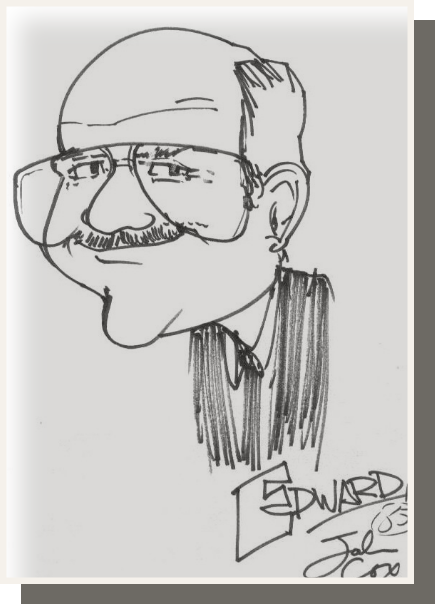
Insights and Reflections by Edward G. Simmons
Welcome to The Author’s Desk—where historian Edward G. Simmons shares timely reflections on faith, history, justice, and the soul of our society. Each article is a call to think deeply, act wisely, and stay rooted in truth.
Is Humanity Losing
Its Soul to AI?
Historian Yuval Noah Harari warns AI is erasing what makes us human. Simmons ties this to the Bible’s moral vision and asks—can we stop the slide?
Historian Yuval Noah Harari warns that the very traits that make us human—our moral compass and need for rest—are under threat. Drawing from biblical imagery, Harari sees dangers not just in political turmoil, but in the rise of AI agents replacing human judgment, empathy, and ethics. In an era where technology works 24/7, are we sacrificing the Sabbath and our sense of right and wrong to machines that don’t care? Will we listen to the prophets of today before it’s too late?
Is Turning the Other Cheek
Still Enough?
What does courage look like when love meets cruelty? Simmons wrestles with nonviolence in a ruthless age.
Jesus taught us to meet violence with love, not retaliation. But how do we respond when today’s bullies have no conscience—only a thirst for power? In this powerful reflection, historian Edward Simmons explores the difference between personal forgiveness and societal appeasement. From the legacy of Gandhi and Dr. King to the threat of modern nihilists like Trump and Putin, he argues that love must be paired with courage, truth, and resistance. Now more than ever, unified nonviolent action—not silence or compromise—is the path to preserving justice, human dignity, and the soul of our democracy.
Christmas 2024: Lessons from Scrooge, Warnings for Today
Dickens’ Scrooge offers haunting parallels to today’s billionaire class. Simmons calls for a return to compassion.
Charles Dickens gave us a timeless Christmas message through Scrooge’s transformation—a call to put people over profit. But in today’s America, powerful elites seem to echo the old Scrooge, not the redeemed one. As billionaire interests tighten their grip and compassion takes a back seat, will it take another collapse to remind us of Marley’s warning: “Mankind was my business”?
Persistence After Defeat:
Lessons from King, Carter, and Beethoven
Drawing on King, Carter, and Beethoven, Simmons reflects on staying the course after moral and political setbacks.
In the wake of Trump’s 2024 victory, many are asking: where do we go from here? Historian Edward G. Simmons offers a powerful response—one grounded in moral clarity, courage, and the enduring vision of the Beloved Community. Drawing inspiration from Martin Luther King Jr., President Jimmy Carter, and Beethoven’s symphonies, Simmons calls for unyielding persistence in the fight for human rights, justice, and unity. This is not the time to abandon values—but to strengthen them.
The Most Dangerous Idea in Human History? Genuine Human Equality.
What makes equality so threatening—and so transformative?
Equality has shaped revolutions, inspired scripture, and challenged empires—but it’s also been feared, limited, and distorted. From the Declaration of Independence to the teachings of Jesus, the call to love our neighbor and see all as equal has always threatened systems of power. Today, that call remains urgent. This idea isn’t just dangerous—it’s divine.
Is Humanity Losing
Its Soul to AI?
Historian Yuval Noah Harari warns AI is erasing what makes us human. Simmons ties this to the Bible’s moral vision and asks—can we stop the slide?
Historian Yuval Noah Harari warns that the very traits that make us human—our moral compass and need for rest—are under threat. Drawing from biblical imagery, Harari sees dangers not just in political turmoil, but in the rise of AI agents replacing human judgment, empathy, and ethics. In an era where technology works 24/7, are we sacrificing the Sabbath and our sense of right and wrong to machines that don’t care? Will we listen to the prophets of today before it’s too late?
Is Turning the Other Cheek
Still Enough?
What does courage look like when love meets cruelty? Simmons wrestles with nonviolence in a ruthless age.
Jesus taught us to meet violence with love, not retaliation. But how do we respond when today’s bullies have no conscience—only a thirst for power? In this powerful reflection, historian Edward Simmons explores the difference between personal forgiveness and societal appeasement. From the legacy of Gandhi and Dr. King to the threat of modern nihilists like Trump and Putin, he argues that love must be paired with courage, truth, and resistance. Now more than ever, unified nonviolent action—not silence or compromise—is the path to preserving justice, human dignity, and the soul of our democracy.
Christmas 2024: Lessons from Scrooge, Warnings for Today
Dickens’ Scrooge offers haunting parallels to today’s billionaire class. Simmons calls for a return to compassion.
Charles Dickens gave us a timeless Christmas message through Scrooge’s transformation—a call to put people over profit. But in today’s America, powerful elites seem to echo the old Scrooge, not the redeemed one. As billionaire interests tighten their grip and compassion takes a back seat, will it take another collapse to remind us of Marley’s warning: “Mankind was my business”?
Persistence After Defeat:
Lessons from King, Carter, and Beethoven
Drawing on King, Carter, and Beethoven, Simmons reflects on staying the course after moral and political setbacks.
In the wake of Trump’s 2024 victory, many are asking: where do we go from here? Historian Edward G. Simmons offers a powerful response—one grounded in moral clarity, courage, and the enduring vision of the Beloved Community. Drawing inspiration from Martin Luther King Jr., President Jimmy Carter, and Beethoven’s symphonies, Simmons calls for unyielding persistence in the fight for human rights, justice, and unity. This is not the time to abandon values—but to strengthen them.
The Most Dangerous Idea in Human History? Genuine Human Equality.
What makes equality so threatening—and so transformative?
Equality has shaped revolutions, inspired scripture, and challenged empires—but it’s also been feared, limited, and distorted. From the Declaration of Independence to the teachings of Jesus, the call to love our neighbor and see all as equal has always threatened systems of power. Today, that call remains urgent. This idea isn’t just dangerous—it’s divine.