The Author's
Perspective
Edward G. Simmons brings together biblical insight, historical knowledge, and ethical clarity in his books, offering readers a fresh and fearless exploration of faith in the context of today’s challenges. With a background in theology, history, and science, Simmons guides readers to reflect deeply on values, truth, and the spiritual crossroads of our time.
“Faith, Values, and Truth in Action: Books That Bridge Scripture, History, and Today’s World”
My Books
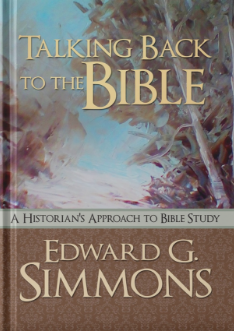
Talking Back to
The Bible
A Historian’s Approach to Bible Study
Also Available in Audiobook
About the Book
In Talking Back to the Bible: A Historian’s Approach to Bible Study, readers are invited into a bold and thought-provoking journey that challenges conventional interpretations of Scripture. Drawing from historical context, scholarly insight, and a deep respect for the biblical text, this book encourages believers and seekers alike to ask difficult questions, explore unfamiliar perspectives, and move beyond passive acceptance of inherited beliefs. With clarity and courage, the author reframes familiar passages through the lens of history and lived experience—revealing how Scripture can remain alive, relevant, and transformative in today’s morally complex world. Talking Back to the Bible doesn’t undermine faith; it deepens it, equipping readers to wrestle with truth, grow in understanding, and embrace a more informed, spiritually grounded approach to the Word.
Charles Asher
Phi Beta Kappa Reviews
Whether one is religious, historically minded, both, or simply a passionate student of rhetoric, Talking Back to the Bible is essential reading for understanding Christian texts equally through a factual and spiritual lens and, ultimately, applying this balanced and open approach to all facets of study and life.
Rev. Dr. Benjamin T. Jordan
Associate Professor of the Practice, Engineering Management, Vanderbilt University School of Engineering Retired Elder in the Tennessee Conference of the United Methodist Church
Rev. Dr. J. Colin Harris
Emeritus Professor of Religious Studies,
Mercer University
Dr. Andrea Croce Birch
Dean, College of Fine Arts and Humanities Dean, Undergraduate School, Professor of Philosophy, Brenau University
Talking Back to the Bible, is the most honest account of a spiritual journey that I have ever read. The author concludes that it is most important for human beings to affirm a God with whom they can have a relationship. Having relationships with others is a human need. The Bible, it turns out, is the record of human beings documenting their relationship with God. This opens up a new way of reading the Bible. When human beings read the Bible, they are engaging in an ongoing conversation. As in all relationships, there is give and take, talking to and talking back, asking and listening, becoming closer and at times pulling farther apart.
Rev. Shon Peppers
Associate Pastor, First Presbyterian Church ,Gainesville, GA
When I was a child, I would get in into trouble talking back to my parents. So naturally, I was intrigued with the book’s title and context. The book pleasantly surprised me with the fluid movement of the text and the lens through which it was interpreted. The story line sheds new light on aspects of familiar verses that I have tended to overlook when delving into scripture from a homiletical perspective. I appreciated how the writer infused personal testimony with impactful insight to help make the text even more meaningful to contemporary life. This is truly a remarkable text that has reminded me not to limit how we approach the various ways in which we study the Bible. I would recommend this book to anyone who has doubts about faith and life while on this journey we all walk.
Publishers Weekly
N/A
Simmons, a continuing-education teacher at Brenau University in Gainesville, Ga., combines Bible study with historical perspective to challenge traditional views on the life of Jesus and the themes of the Old Testament. In 38 chapters that he calls conversations, Simmons offers his take on various topics that he examines in light of their historical context. His study can be controversial at times, especially for readers from more-conservative backgrounds, with chapters titled “Did Jesus Use a Bathroom?” “Why Jesus Wasn’t a Christian,” and “Can God be Trusted?” But the author believes that asking these sorts of questions and measuring them against the historical context will allow the reader to go deeper into a personal understanding of God and the Bible. Simmons argues that viewing Jesus through modern glasses results in different, more useful interpretations. When examining Jesus in the context of what people believed at the time, for example, Jesus becomes more human (with all the attendant temptations of humanity) and a man with a mission rather than a messiah. Although it is somewhat scattered, the book offers fresh perspectives on everything from passages about Daniel’s visions to modern worship.

Charles Asher
Phi Beta Kappa Reviews
Whether one is religious, historically minded, both, or simply a passionate student of rhetoric, Talking Back to the Bible is essential reading for understanding Christian texts equally through a factual and spiritual lens and, ultimately, applying this balanced and open approach to all facets of study and life.
Rev. Dr. Benjamin T. Jordan
Associate Professor of the Practice, Engineering Management, Vanderbilt University School of Engineering Retired Elder in the Tennessee Conference of the United Methodist Church
Rev. Dr. J. Colin Harris
Emeritus Professor of Religious Studies,
Mercer University
Dr. Andrea Croce Birch
Dean, College of Fine Arts and Humanities Dean, Undergraduate School, Professor of Philosophy, Brenau University
Talking Back to the Bible, is the most honest account of a spiritual journey that I have ever read. The author concludes that it is most important for human beings to affirm a God with whom they can have a relationship. Having relationships with others is a human need. The Bible, it turns out, is the record of human beings documenting their relationship with God. This opens up a new way of reading the Bible. When human beings read the Bible, they are engaging in an ongoing conversation. As in all relationships, there is give and take, talking to and talking back, asking and listening, becoming closer and at times pulling farther apart.
Rev. Shon Peppers
Associate Pastor, First Presbyterian Church ,Gainesville, GA
When I was a child, I would get in into trouble talking back to my parents. So naturally, I was intrigued with the book’s title and context. The book pleasantly surprised me with the fluid movement of the text and the lens through which it was interpreted. The story line sheds new light on aspects of familiar verses that I have tended to overlook when delving into scripture from a homiletical perspective. I appreciated how the writer infused personal testimony with impactful insight to help make the text even more meaningful to contemporary life. This is truly a remarkable text that has reminded me not to limit how we approach the various ways in which we study the Bible. I would recommend this book to anyone who has doubts about faith and life while on this journey we all walk.
Publishers Weekly
N/A
Simmons, a continuing-education teacher at Brenau University in Gainesville, Ga., combines Bible study with historical perspective to challenge traditional views on the life of Jesus and the themes of the Old Testament. In 38 chapters that he calls conversations, Simmons offers his take on various topics that he examines in light of their historical context. His study can be controversial at times, especially for readers from more-conservative backgrounds, with chapters titled “Did Jesus Use a Bathroom?” “Why Jesus Wasn’t a Christian,” and “Can God be Trusted?” But the author believes that asking these sorts of questions and measuring them against the historical context will allow the reader to go deeper into a personal understanding of God and the Bible. Simmons argues that viewing Jesus through modern glasses results in different, more useful interpretations. When examining Jesus in the context of what people believed at the time, for example, Jesus becomes more human (with all the attendant temptations of humanity) and a man with a mission rather than a messiah. Although it is somewhat scattered, the book offers fresh perspectives on everything from passages about Daniel’s visions to modern worship.
Values, Truth, and
Spiritual Danger
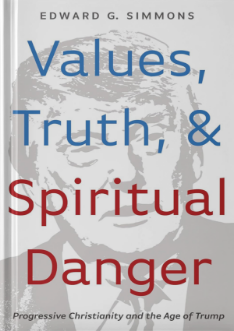
Values, Truth, and Spiritual Danger
Progressive Christianity and the Age of Trump
About the Book
In Values, Truth, and Spiritual Danger: Progressive Christianity and the Age of Trump, historian and theologian Edward Simmons confronts one of the most critical moral crossroads in modern history. With clarity and conviction, Simmons explores how Christian faith, grounded in the teachings of Jesus, can respond to the rise of MAGA ideology—a movement often steeped in nationalism, disinformation, and authoritarian values. Rather than offering partisan rhetoric, the book delivers a powerful call to reclaim truth, integrity, and compassion as essential Christian virtues. Drawing from history, Scripture, and personal experience, Simmons challenges readers to examine how spiritual beliefs intersect with political choices and to courageously stand for justice in the face of cultural and moral decay. Values, Truth, and Spiritual Danger is both a timely critique and an inspiring roadmap for believers seeking to live out their faith with integrity in an era of deception and division.
Amy-Jill Levine
Hartford Seminary
“In a searing collection of essays from the heart of Progressive Christianity to the soul of the American people, Edward Simmons proclaims the ethics at the center of the biblical traditions and prophesies what happens when that message goes unheeded.”
David Ludden
Georgia Gwinnett College
David P. Gushee
Mercer University
Christina Avina
Pacific Book Reviews
David Allen
Hollywood Book Reviews
Amy-Jill Levine
Hartford Seminary
“In a searing collection of essays from the heart of Progressive Christianity to the soul of the American people, Edward Simmons proclaims the ethics at the center of the biblical traditions and prophesies what happens when that message goes unheeded.”
David Ludden
Georgia Gwinnett College
David P. Gushee
Mercer University
Christina Avina
Pacific Book Reviews
“A powerful and thought-provoking exploration of faith and politics in the Trump era—Simmons masterfully bridges theology, history, and personal experience to challenge modern Christians to rethink their values.”
David Allen
Hollywood Book Reviews
“A bold, scholarly, and deeply humanistic call to reclaim faith through truth, history, and inclusivity— Edward G. Simmons invites readers to confront today’s moral crises with courage, compassion, and clarity”